



Pyruvate Kinase
Pyruvate kinase is an enzyme that catalyzes the conversion of phosphoenolpyruvate and ADP to pyruvate and ATP in glycolysis and plays a role in regulating cell metabolism. There are four mammalian pyruvate kinase isoforms with unique tissue expression patterns and regulatory properties. Pyruvate kinase has four different tissue-specific isozymes in animals, PKL, PKR, PKM1, and PKM2. The L and R isozymes are expressed in the liver (L) and red blood cells (R), whereas PKM2 is expressed in early embryonic cells and other proliferating cells, and PKM1 is expressed in the brain, skeletal muscle, and heart which need high energy.
PKM1 and PKM2 are formed by a single mRNA transcript of the PKM gene by alternative splicing. The oligomers of PKM2 exist in high activity tetramer and low activity dimer forms. The dimer PKM2 regulates the rate-limiting step of glycolysis that shifts the glucose metabolism from the normal respiratory chain to lactate production in tumor cells. Besides its role as a metabolic regulator, it also acts as a protein kinase, which contributes to tumorigenesis. PKM2 serves as a promising target for cancer treatment.
All Product Categories
-
Pyruvate Kinase Related Products (89)
Related Products (89)

-
Antibodies (6)
-
METTL1-WDR4-IN-1 TFA
 0 ImagesCat. No.: HY-162080APurity: 99.61%METTL1-WDR4-IN-1 (Compound 1) TFA is a selective competitive inhibitor of the methyltransferase complex METTL1-WDR4 (IC50=144 μM). METTL1-WDR4-IN-1 TFA inhibits the m7G methyltransferase activity of the METTL1-WDR4 complex, blocking the m7G modification of PKM mRNA, reducing PKM2 protein expression, disrupting the METTL1/PKM2/H3K9la positive feedback loop, and simultaneously inhibiting PKM2 nuclear translocation-mediated CD155 transcriptional activation. METTL1-WDR4-IN-1 TFA can inhibit tumor cell proliferation, weaken glycolytic metabolism, reverse tumor immune evasion (restoring NK cell and CD8+ T cell function), and regulate RNA epigenetic modification and the tumor immune microenvironment. METTL1-WDR4-IN-1 TFA can be used in immunotherapy research for cancers such as colorectal cancer, and is particularly suitable for use in combination with PKM2 inhibitors to enhance anti-tumor treatment efficacy.
-
LIQ1
 0 ImagesCat. No.: HY-179371CAS No.: 2606032-80-6LIQ1, a flavonoid derivative, is a potent Pyruvate kinase M2 (PKM2) allosteric inhibitor (IC50 = 0.39 μM; Kd = 4.5 μM) targeting Arg43 within the polyarginine pocket. LIQ1 exhibits efficacy in a mouse model of LPS (HY-D1056)-induced endotoxemia, preventing the nuclear translocation of PKM2 and inhibiting its binding to HIF-1α, thereby suppressing IL-1β transcription. LIQ1 can be used for the research of endotoxemia[1].
-
ML202
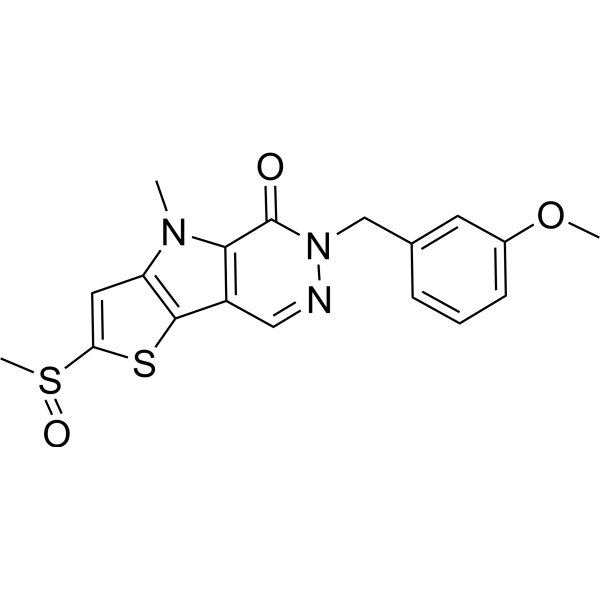 0 ImagesML202 is a highly specific allosteric activator of human pyruvate kinase M2 (hPK-M2), which can affect the cooperativity of phosphoenolpyruvate (PEP) binding, while adenosine diphosphate (ADP) binding almost no effect.
-
(Rac)-Etavopivat
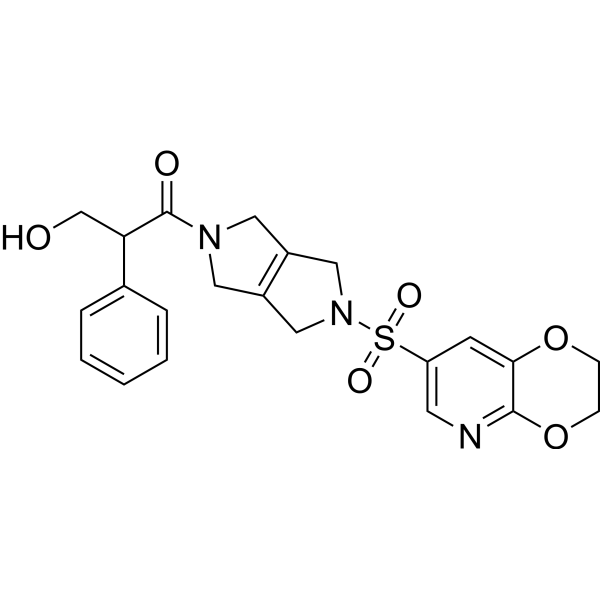 0 ImagesSynonyms: (Rac)-FT-4202(Rac)-Etavopivat ((Rac)-FT-4202) is an isomer of Etavopivat (HY-139573). Etavopivat is an orally active erythrocyte pyruvate kinase-R (PKR) activator that can be used in studies of sickle cell disease and other haemoglobinopathies.
-
PKR activator 5
 0 ImagesCat. No.: HY-159095CAS No.: 2761226-35-9PKR activator 5 (Compound 18) is an activator for pyruvate kinase R (PKR) with an AC50 of 28 nM.
-
PKM2 activator 10
 0 ImagesCat. No.: HY-155216CAS No.: 2490276-04-3PKM2 activator 10 (Compd I) is a PKM2 activator with anti-tumor activity. PKM2 activator 10 can be utilized in cancer research.
-
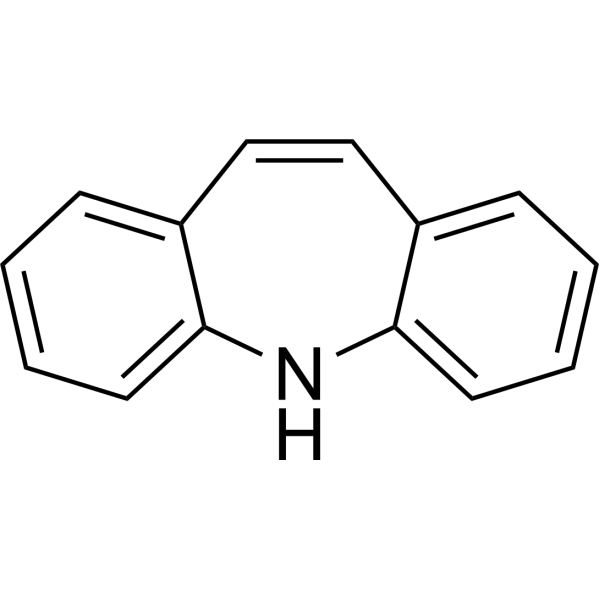
Iminostilbene-d10
 0 ImagesCat. No.: HY-W753956CAS No.: 3044090-39-0Iminostilbene-d10 is the deuterium labeled Iminostilbene (HY-N7064). Iminostilbene is a chemical precursor of carbamazepine. Additionally, Iminostilbene is an orally active inhibitor of PKM2 (Pyruvate Kinase M2) and COX2 (Cyclooxygenase-2). Iminostilbene exerts its effects by inhibiting PKM2 and its interaction with HIF-1α and STAT3, reducing COX2 and iNOS expression, and decreasing LPS-induced release of IL-1β, IL-6, TNF-α, and MCP-1, thereby suppressing macrophage-mediated inflammatory responses and improving myocardial ischemia/reperfusion (MI/R) injury. Iminostilbene holds promise for research in inflammation regulation, cardiovascular diseases (such as MI/R injury), and macrophage-mediated immune-related diseases.
-
PKM2-IN-10
 0 ImagesCat. No.: HY-172881PKM2-IN-10 (Compound 16) is a PKM2 inhibitor. PKM2-IN-10 inhibits the proliferation of A549 and HCC1833 cell lines with IC50 of 3.36 μM and 9.20 μM, respectively. PKM2-IN-10 exhibits antitumor activity in human non-small cell lung cancer (NSCLC) and mouse lung adenocarcinoma models. PKM2-IN-10 can be used in lung cancer research.
-
PKM2 modulator 2
 0 ImagesCat. No.: HY-168883CAS No.: 1356760-50-3PKM2 modulator 2 (compound C599) is a potent PKM2 inhibitor. PKM2 modulator 2 shows antiproliferative activity. PKM2 modulator 2 induces apoptosis. PKM2 modulator 2 has the potential for the research of glioblastoma.
-
Pyruvate Kinase/Lactic Dehydrogenase enzymes, Rabbit
 0 ImagesCat. No.: HY-E70953Pyruvate Kinase/Lactic Dehydrogenase enzymes, Rabbit catalyzes an ATP-dependent phosphorylation of glycolate to yield 2-phosphoglycolate. Pyruvate kinase requires bivalent and monovalent cations such as Mg2+ and K+ respectively for activation to occur.
-
PKM2-IN-13
 0 ImagesCat. No.: HY-180523PKM2-IN-13 is a selective PKM2 inhibitor inhibiting PKM2 with an IC50 value of 55.13 μM. PKM2-IN-13 exhibits broad-spectrum anticancer activity with low toxicity to normal cells. PKM2-IN-13 induces apoptosis by elevated ROS levels and activation of caspases 3/7, and interacts with and inhibits the glycolytic activity of Pyruvate Kinase M2 in virto. PKM2-IN-13 demonstrates a favorable safety profile with no significant adverse effects in vivo. PKM2-IN-13 can be used for oral squamous cell carcinoma (OSCC), colon carcinoma, breast cancer and melanoma research.
-
PKM2-IN-12
 0 ImagesCat. No.: HY-178748PKM2-IN-12 is an orally active PKM2 inhibitor with an IC50 of 10 nM. PKM2-IN-12 inhibits COLO-205 cell proliferation and migration, arrests the cell cycle, and induces apoptosis. PKM2-IN-12 significantly reduces cellular levels of lactate, pyruvate, and ROS. PKM2-IN-12 directly kills cancer cells and restores disrupted gut microbiota balance in mice model. PKM2-IN-12 can be used to study colorectal cancer.
-
PKM2-IN-8
 0 ImagesCat. No.: HY-170577CAS No.: 3115004-02-6PKM2-IN-8 (Compound 9b) is a pyruvate kinase M2 (PKM2) inhibitor (IC50 = 0.31 μM). PKM2-IN-8 has potent antiproliferative activity against U87MG glioma cells. PKM2-IN-8 can induce early apoptosis and reduce lactate levels. PKM2-IN-8 can be used for the research of glioblastoma.
-
SET-171
 0 ImagesCat. No.: HY-168337CAS No.: 3052985-32-4SET-171 is a JNK (c-Jun N-terminal kinase) inhibitor that exhibits significant anticancer activity and lipid metabolism regulation by inhibiting liver pyruvate kinase (PKL) expression. In anticancer studies, SET-171 shows IC50 values of 8.82 μM and 2.97 μM against HepG2 and Huh7 cell lines, respectively, indicating high cytotoxicity. Additionally, in non-alcoholic fatty liver disease (NAFLD)-related studies, SET-171 significantly reduces triacylglycerol (TAG) levels and inhibits the expression of steatosis-related proteins. SET-171 holds promise for research on hepatocellular carcinoma (HCC) and NAFLD.
-
Mitapivat-d8
 0 ImagesCat. No.: HY-12689SSynonyms: AG-348-d8Mitapivat-d8 (AG-348-d8) is the deuterium labeled Mitapivat (HY-12689). Mitapivat (AG-348) is an orally active pyruvate kinase allosteric activator. Mitapivat increases enzymatic activity, protein stability, and ATP levels over a broad range of PKLR genotypes, shows the potential to restore the activity of PK (pyruvate kinase)-deficient glycolytic pathways. Mitapivat can be used in study of PK deficiency.
-
Mitapivat hemisulfate
 0 ImagesCat. No.: HY-12689BCAS No.: 2329710-91-8Synonyms: AG-348 hemisulfateMitapivat hemisulfate is an orally active pyruvate kinase allosteric activator. Mitapivat hemisulfate increases enzymatic activity, protein stability, and ATP levels over a broad range of PKLR genotypes, shows the potential to restore the activity of PK (pyruvate kinase)-deficient glycolytic pathways. Mitapivat hemisulfate can be used in study of PK deficiency.
-
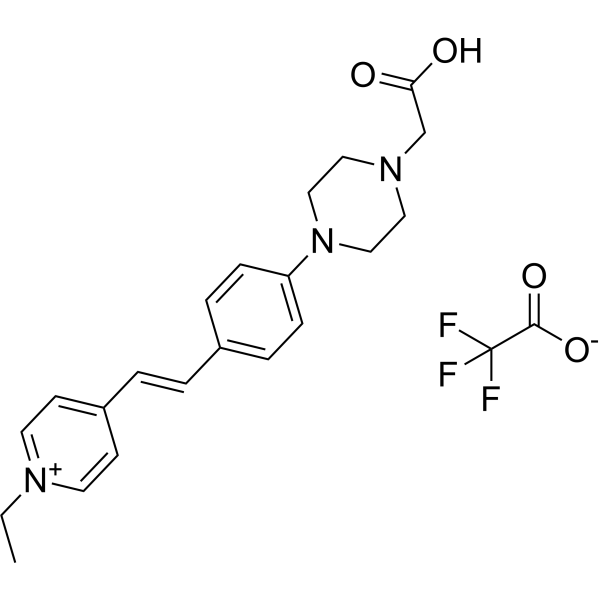
Mitapivat hemisulfate sesquihydrate
 0 ImagesCat. No.: HY-12689ACAS No.: 2151847-10-6Synonyms: AG-348 hemisulfate sesquihydrateMitapivat hemisulfate sesquihydrate (AG-348) is an orally active pyruvate kinase allosteric activator. Mitapivat increases enzymatic activity, protein stability, and ATP levels over a broad range of PKLR genotypes, shows the potential to restore the activity of PK (pyruvate kinase)-deficient glycolytic pathways. Mitapivat can be used in study of PK deficiency.
-
PKM2-IN-11
 0 ImagesCat. No.: HY-178441PKM2-IN-11 is a PKM2 inhibitor (IC50 = 0.363 μM). PKM2-IN-11 has dual mechanisms involving pyruvate kinase M2 (PKM2) inhibition and microtubule stabilization. PKM2-IN-11 can decrease PKM2 protein levels in MCF-7 cells. PKM2-IN-11 can slightly reduce reactive oxygen species (ROS) levels and significantly increase early apoptotic cells. PKM2-IN-11 induces G2/M phase arrest. PKM2-IN-11 can be used for the study of breast cancer.




